Cetacean Taxonomy
Order Cetacea
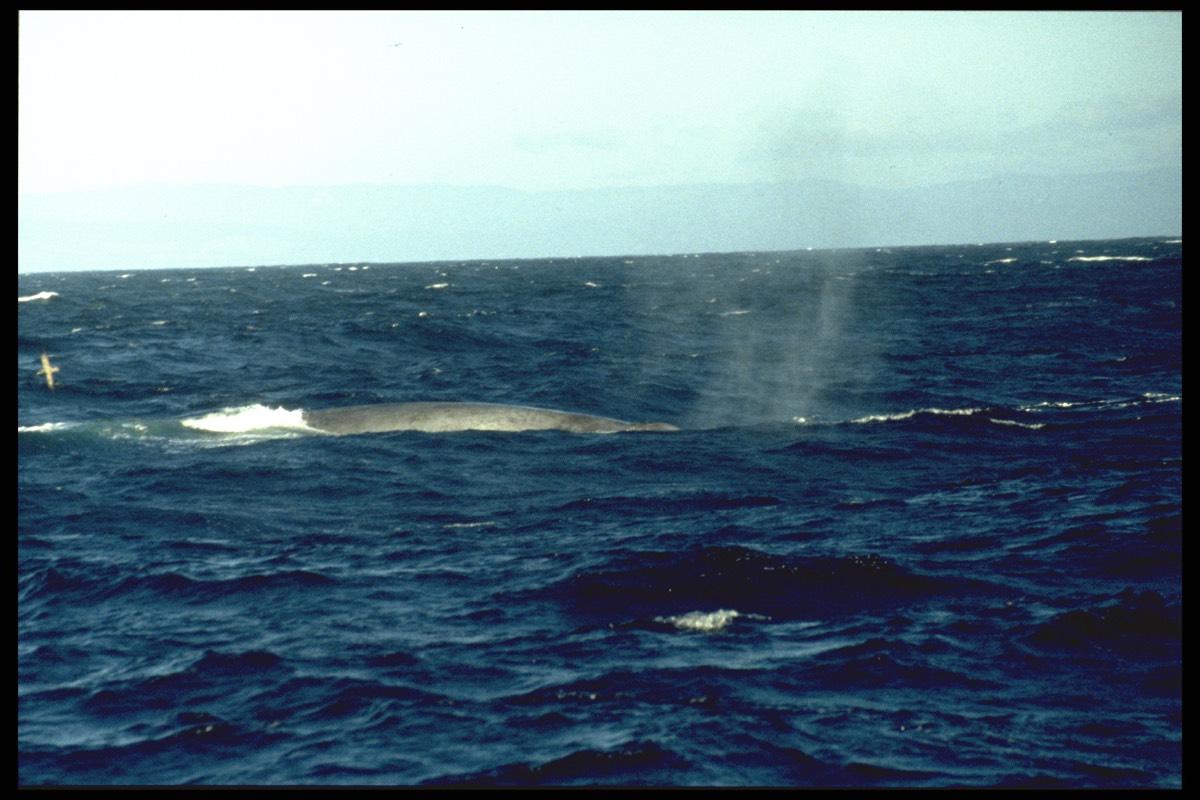
Mysticeti
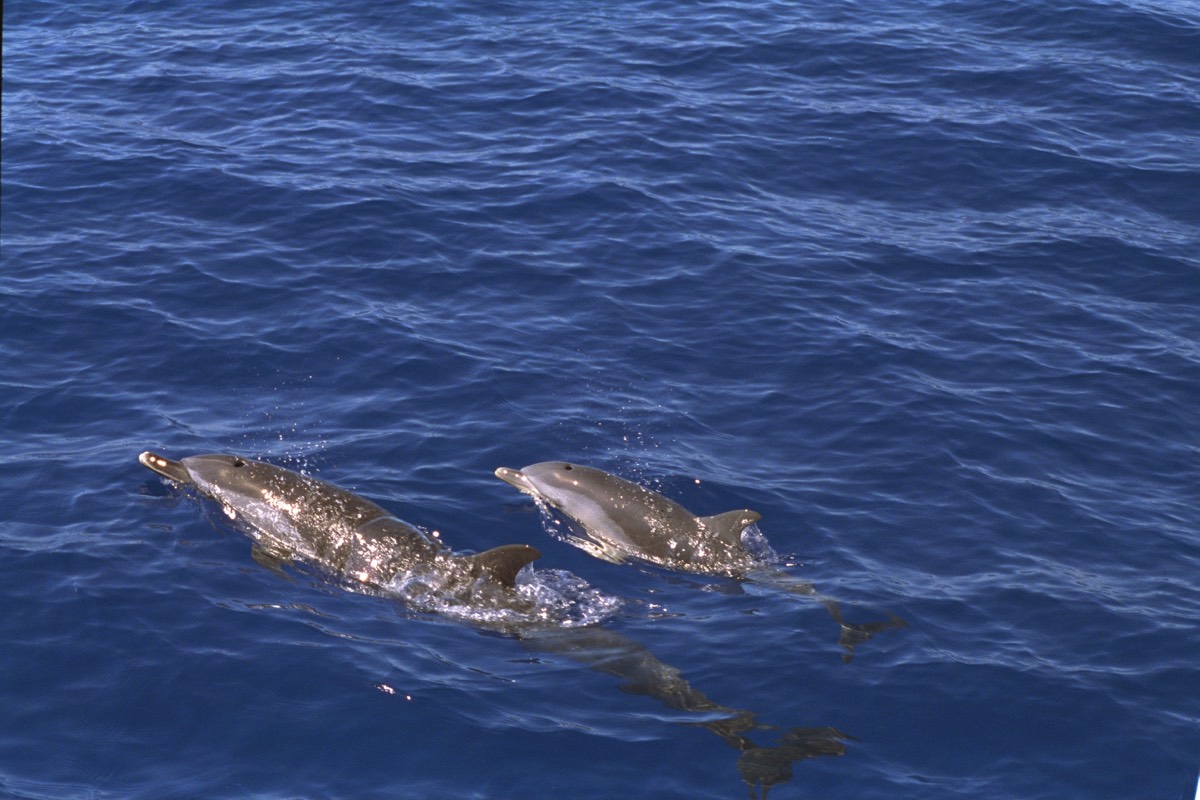
Odontoceti
Cetacean suborders
The modern cetaceans, the order Cetacea, are represented by two suborders: the baleen whales or Mysticeti and the toothed whales or Odontoceti. The third suborder, the Archeoceti is now extinct. The main differences between the two groups are:
| Mysticeti | Odontoceti |
|---|---|
| No teeth. Instead they have keratin baleen plates, suspended from the roof of the mouth | All species have teeth. There number of teeth varies from 2 in some beaked whales to more than 250 in some dolphin species. |
| Two nasal openings (or blowholes) | Single nasal opening (or blowhole) |
| The skull is symmetrical | The skull is asymmetrical |
| The melon is present only in the fetal stage and absent or poorly developed in adults. They have no echolocation capabilities. | The melon is well developed. It plays a major role in echolocation. |
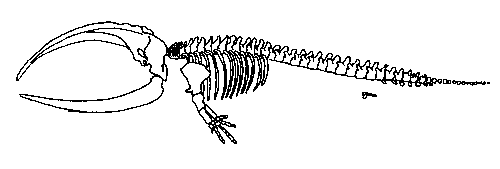
Baleen whale skeleton (Eubalaena glacialis)
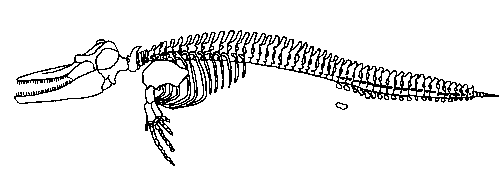
Toothed whale skeleton (Orcinus orca)
A note on the taxonomy of whales and dolphins
The taxonomy of cetaceans is still subject to change. Recent developments in the fields of paleontology, molecular biology (especially DNA sequencing) and phylogeny have led to new insights into this area. In a recent publication, Rice (1998) proposed a number of new cetaceans families and a species status for some varieties that may or may not have been accepted as subspecies before. In addition, some species names have been altered.
On this site, I have used the more traditional list of species and families, but where there are differences between this list and the one proposed by Rice, I have added the new names (and inserted family names) marked with ‡.
- Rice, D.W. (1998)
- Marine mammals of the world - Systematics and distribution
- Society of Marine Mammalogy Special Publication Number 4, 231 pp.
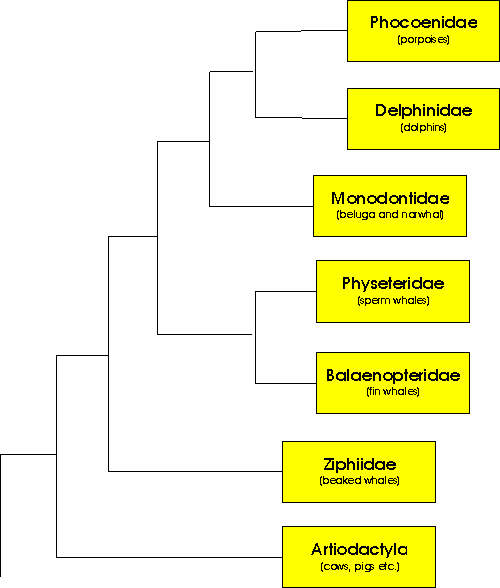
Classification of sperm whales
- Examination of mitochondrial ribosomal DNA sequences>/li>
- The embryonal development of the nasal structures in sperm whales resembles that of the baleen whales.
- Sperm whales have 2 air ducts ending leading to a single blowhole, so although the sperm whale has only one external blowhole (an odontocete feature), the internal air ducts suggests a double air passage, much like that in mysticetes (baleen whales).
- Baleen whales currently have no echolocation, but have most likely had that capability in the past. In baleen whales fetuses, evidence of a vestigial melon has been found. The melon is the "acoustical lens" needed for echolocation in toothed whales. So the baleen whales may have had echolocation, but lost it later.
- Evans, P.G.H (1987)
- The natural history of whales and dolphins.
- Christopher Helm, London
- Klima, M (1995)
- Cetacean phylogeny and systematics based on the morphogenesis of the nasal skull.
- Aquatic Mammals 21(2):79-89
- Milinkovitch, M.C., Orti, G. and Meyer, A. (1993)
- Revised phylogeny of whales by mitochondrial ribosomal DNA sequences.
- Nature 361: 346-348
Sources for the common names in different languages
There are no set rules for non-scientific animal names. The lists of common names provided on this site is by no means exhaustive and there can be any number of different regional names for a certain species within any language. Some species may not have a common name in certain languages. The lists of common names are based on the sources listed below. Corrections and/or additions are welcome. If you wish to provide a list of common names in a language not yet listed on this site, please feel free to do so. Please use a common format, like Word, Excel, Pages, Numbers or plain text.